A brand that once fitted your business perfectly can quietly fall behind it. You grow, your customers change, competitors look sharper — and your logo, website and message stop telling the right story. But rebranding is a big decision, and changing too much without a reason can confuse the customers you already have.
Short answer: rebrand when your business has changed — new services, new markets, new audience, a merger or a reputation problem — and your brand no longer reflects it. If the business is the same but the look feels dated, a brand refresh is usually enough.
Refresh or rebrand?
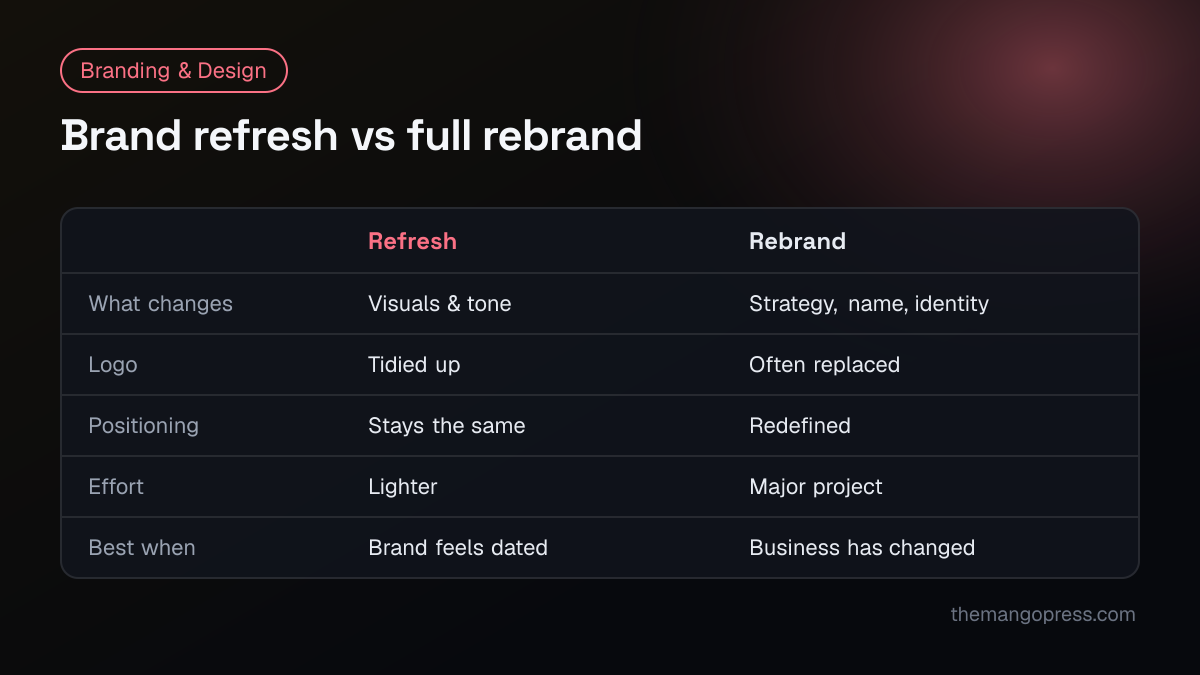
A refresh updates how your brand looks and sounds — a tidier logo, updated colours, better typography, new photography — while keeping what people recognise.
A rebrand goes deeper. It revisits your positioning, audience and message, and may change your name, logo and entire visual identity.
8 signs it's time to rebrand
1. Your business has outgrown your brand
You started as a local design shop and now offer web, marketing and AI services to clients abroad. If your brand still says "small" or "local", it holds you back with bigger customers.
2. You are entering new markets
Expanding into the UK, the Gulf or North America? A name, tagline or visual style that works at home may not translate — or may already be used by someone else there.
3. You are targeting a different audience
Moving from consumers to businesses, or from budget to premium, needs a brand that speaks to the new buyer.
4. You look like everyone else
If your logo, colours and messaging could be swapped with a competitor's, customers have no reason to remember you.
5. Your brand is inconsistent
Different logos, colours and tones across your website, social media and documents make a business look disorganised. Sometimes the fix is a proper brand identity system rather than a new logo.
6. It no longer looks credible
A dated website and logo can make an excellent company look smaller or less trustworthy than it is — especially to buyers who meet you online first.
7. A merger, acquisition or new leadership
When two companies combine, or the strategy changes, the brand needs to tell one clear story.
8. A reputation you need to move past
If the brand is tied to problems that have since been fixed, a rebrand can mark a genuine change — as long as the business itself has really changed.
Bad reasons to rebrand
- You are bored of your logo. Your customers see it far less than you do.
- A new manager wants to make a mark.
- A competitor rebranded.
- Sales are down for reasons that have nothing to do with the brand, such as price, product or service.
How to rebrand step by step
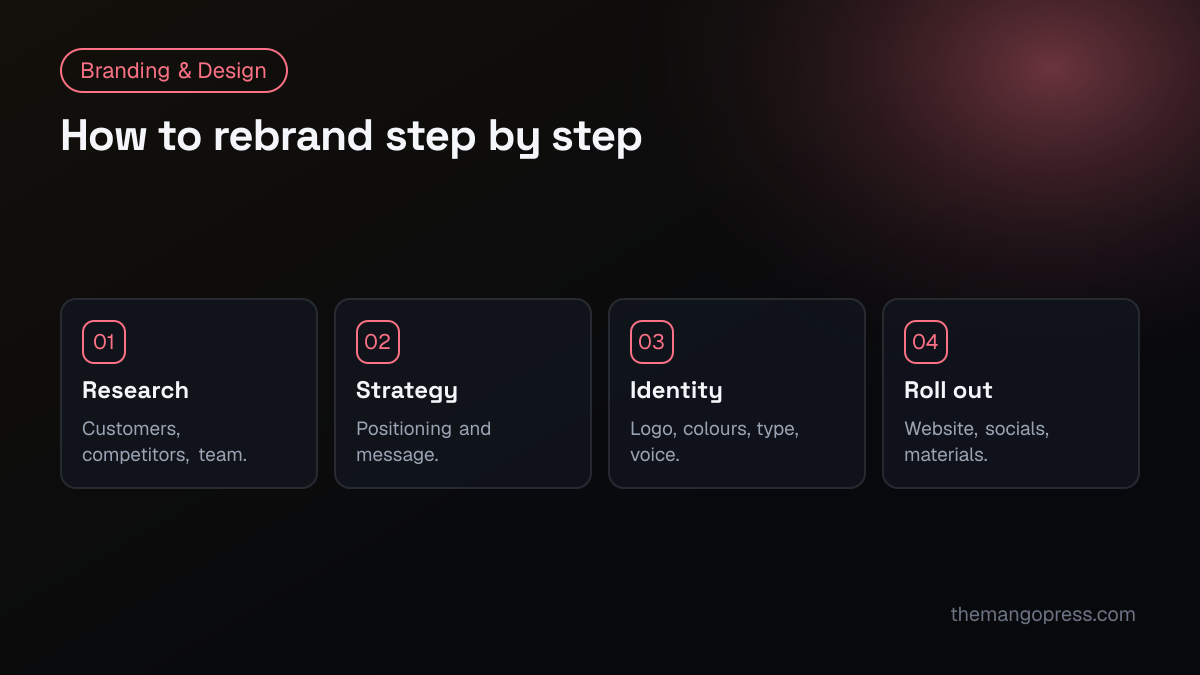
- Research. Talk to customers and your team. What do people value? What do they misunderstand? How do competitors position themselves?
- Strategy. Define your positioning, audience, personality and key messages. This guides every design decision.
- Identity. Design the logo, colour palette, typography, imagery style and tone of voice — and document them in brand guidelines.
- Roll out. Update your website, social profiles, Google Business Profile, documents, signage and email signatures. Plan a launch so customers understand why you changed.
Protecting what you have already built
- Keep recognisable elements where you can — a colour, a symbol or a name.
- Tell customers why you changed, so they see progress rather than confusion.
- Protect SEO. If your name or domain changes, redirect old URLs and update your business listings everywhere. Our website redesign checklist covers the technical side.
- Check the name is available — domain, social handles and trademarks in each market you serve.
Frequently asked questions
How long does a rebrand take?
A refresh can take a few weeks. A full rebrand with research, strategy, a new identity and a website usually takes a few months, depending on the size of the business.
How often should a business rebrand?
There is no fixed rule. Many businesses refresh their visuals every few years and only fully rebrand when the business itself changes significantly.
Will rebranding lose customers?
Not if it is done well. Explain the change, keep what customers value, and make sure the new brand delivers a better experience.
Should I change my business name?
Only if the name is limiting, confusing, hard to use in new markets or legally risky. A name change is the most disruptive part of a rebrand.
Thinking about a refresh or a rebrand? Our branding & design team handles research, strategy, identity and rollout — see the Omair Farooqui brand and website project, or get in touch for an honest view on whether you need a rebrand at all.