A logo is not a brand identity. A brand identity is the complete system of visual and verbal elements that makes your business instantly recognisable — and consistent on your website, social media, ads, documents and packaging.
Short answer: a complete brand identity includes a clear brand strategy, a logo suite, colour palette, typography, imagery style, tone of voice and a set of brand guidelines that tells everyone how to use them. Use the checklist below to see what you already have and what is missing.
Why brand identity matters
- Recognition. Consistent visuals help people remember you after one or two exposures.
- Trust. A polished, coherent brand signals that you are established and reliable — vital when selling to new international markets.
- Efficiency. With clear rules and templates, your team creates on-brand content faster.
- Better marketing performance. Ads, social posts and landing pages that look like they belong together tend to perform better than a patchwork.
The brand identity checklist
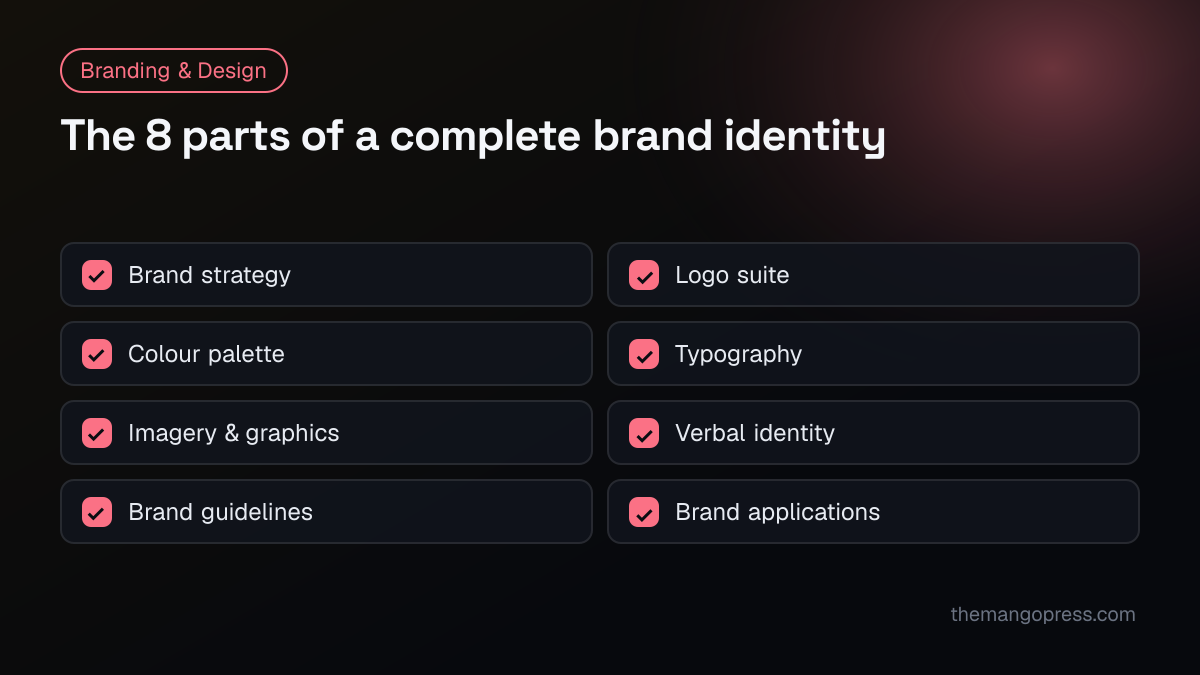
1. Brand strategy (the foundation)
- Purpose — why the business exists beyond making money.
- Positioning statement — who you serve, what you offer and why you are different.
- Target audience — two or three clear customer profiles.
- Brand values — three to five principles that guide decisions.
- Brand personality — for example "confident, warm and straightforward".
- Competitor review — how others in your space look and sound, so you can stand apart.
Design without strategy is decoration. Get this part right first.
2. Logo suite
- Primary logo — your main mark.
- Secondary / horizontal version — for headers and narrow spaces.
- Icon or monogram — for favicons, app icons and social avatars.
- Colour, black and white (reversed) versions.
- Clear space and minimum size rules.
- File formats — SVG and PNG for digital, PDF/EPS for print.
3. Colour palette
- Primary colours (one or two) that people associate with you.
- Secondary and accent colours for highlights and calls to action.
- Neutrals for backgrounds and text.
- Colour codes — HEX and RGB for screens, CMYK and Pantone for print.
- Accessibility check — enough contrast between text and background.
4. Typography
- Heading typeface with personality.
- Body typeface that is easy to read at small sizes.
- Type hierarchy — sizes and weights for headings, body text and captions.
- Licences for web, desktop and app use.
- Fallback fonts for email and documents.
5. Imagery and graphic elements
- Photography style — lighting, subjects, composition.
- Illustration style if you use illustrations.
- Iconography — one consistent icon set.
- Patterns, shapes or textures that reinforce the brand.
- Motion principles for video and animated social content.
6. Verbal identity
- Tone of voice — how you sound, with "we say / we don't say" examples.
- Tagline — a short line that captures your promise.
- Key messages — your elevator pitch, boilerplate and value propositions.
- Naming conventions for products and services.
7. Brand guidelines
- One document (or web page) explaining every element above.
- Do's and don'ts with visual examples.
- Shared, up-to-date location that your team and partners can access.
8. Brand applications
- Website and landing pages
- Social media profile images, cover banners and post templates
- Email signature and newsletter template
- Pitch deck and proposal templates
- Business cards, letterhead and invoices
- Packaging, signage and merchandise (if relevant)
Signs it's time to rebrand
- Your visuals look dated next to competitors.
- You have grown into new services or markets that the old brand does not reflect.
- Every channel looks different because there were never clear rules.
- Customers misunderstand what you do.
- You are moving upmarket and need to justify higher prices.
A rebrand does not always mean starting from zero. Often the right answer is a refresh — keep what people recognise, fix what is holding you back.
Frequently asked questions
What's the difference between a brand and a brand identity?
Your brand is how people perceive your business. Your brand identity is the set of tools — visual and verbal — you use to shape that perception.
How long does it take to create a brand identity?
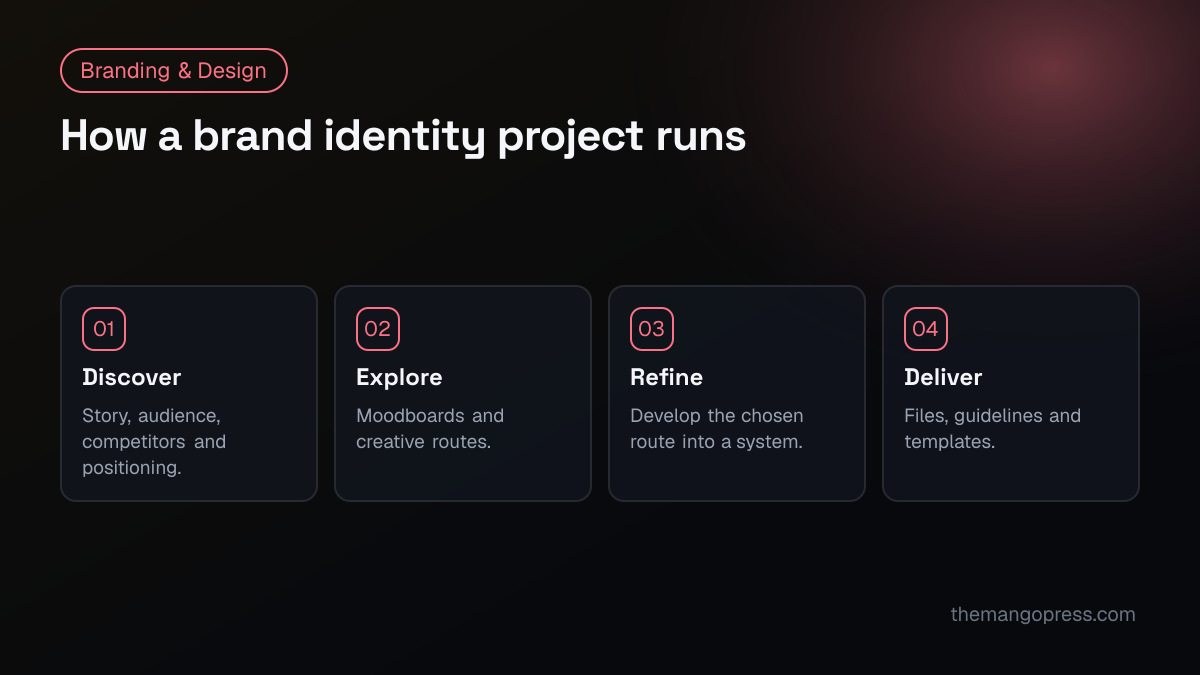
A focused identity project usually takes four to eight weeks, covering discovery, creative exploration, refinement and final guidelines.
Do small businesses need brand guidelines?
Yes. Even a short guide prevents inconsistency as soon as more than one person — or one freelancer — starts creating content for you.
Can I design my own logo?
You can, and many businesses start that way. A professional identity becomes worth it when you need to compete on credibility, raise prices or scale your marketing.
Ready for a brand people remember? Our branding & graphic design team builds complete identity systems — strategy, logo, guidelines and templates. See how we brought Bacha Planet to life online, read our guide to website costs if a new site comes next, or start a conversation.